I think this reddit post does a nice job of summarizing the history of fandom and how it’s led to our current point. But I’m going to go more into how tumblr’s very structure led to a ‘race to the bottom’ sort of enacting of punishment via social justice.
Almost all of this is from personal observation, having been here since late 2010.
To get more into the actual history of it: Racefail ‘09 is the name given to the big, public 2009 debates about racism in genre fiction (published fantasy and sci-fi), which happened primarily on livejournal and private websites. (Racefail was itself the result of the rising awareness of social justice in the real world thanks to the democratization of information via the internet.) Racefail raised a couple of big questions: were non-white (and non-straight/non-cis/non-male) creators being silenced and erased in published genre fiction? And were the stories being told primarily racist/sexist/homophobic and lacking in representation for non-white/Western cultures (and LGBT+/queer/female stories)?
From everything I’ve read I feel like a lot of good came out of these talks; in particular, it greatly raised the awareness of social justice in genre fiction and fandom spaces – which had been there before, but not quite so prominent. But one major bad came out of it: it revealed, via the shitty behavior of one member of the genre fiction community, how social justice could easily be used as a silencing tactic by applying arguments meant to dismantle power structures to individuals who may (or may not!) benefit from those power structures.
Fast-forward to 2010-2012 tumblr. LJ has undergone multiple journal purges and partial restorations, been bought out by a Russian company, and – final straw – changed the way anonymous threaded posts were handled, ending its value as a space for anon memes like kinkmemes. Fandom dispersed. A not-insignificant number of us eventually end up on tumblr, and those of us coming from LJ have brought with us a greater awareness of social justice, particularly lgbt/queer culture and feminism.
At the same time, Facebook has opened its doors to everyone instead of only allowing college students to use it. Facebook has almost single-handedly popularized the notion of making your offline life publicly available online. Gone are the days of keeping your age, real name, and offline identity hidden; we share everything except maybe last names and exact locations.
Tumblr democratizes the fandom experience like never before. Livejournal and forums had moderators; tumblr has none. Communities are gone – instead we have tags where people gather to talk about shared interests. People who previously felt shut out, forced to be ‘lurkers’ because they had nothing to say, could now have a blog and share the work of others via reblogging. The main way to gain social capital is by having the most followers and therefore the most widespread content.
But tumblr is a weird experience compared to other blogging sites because at the time it was the only one with a ‘reblog’ function. any one post can go absolutely viral and the people who see it beyond your immediate circle will lack the context of the rest of your blog. This means that either every single post needs to be entirely self-contained … or get wildly misunderstood. (Guess which one happens.) It also means that that the posts that spread the fastest and furthest are the short, witty ones or – you guessed it – the controversial ones. Finally, people tend to not fact-check – if something is interesting and seems believable, people reblog it uncritically. Tumblr’s dashboard structure actively encourages people to not leave their dash to look at provided external links – you’ll lose your ‘place’ on your endless-scrolling dash, and the little ‘home’ button in the corner is reminding you how many new posts have been created since you last refreshed. You don’t have time to fact-check.
Controversy without context is polarizing – without the original context, people provide their own context and agree or disagree based on a bunch of assumptions. Tumblr is a breeding ground for this. Opinions don’t get more nuanced – they get more vitriolic, more sharp and quick-witted. And with people not bothering to fact-check or click linked information, misinformation spreads like wildfire.
The early experience of fandom on tumblr is one of widespread acceptance.
Possibly because FB does this, people feel safe to share their age, sexuality, and gender on their tumblr profiles – and those identities get more and more specific as people learn more about gender identities and sexual orientations that are off the gender binary. People spread educational posts about queer/LGBT+ culture, feminist theory, and racism alongside fandom posts. The importance of minority representation in the media is a hot topic and posts that criticize media for their lack of (or bad) representation get thousands of notes. Social justice theory – fighting the appropriation of colonized cultures by imperialists, promoting the voices of the oppressed over those of the privileged, the right to be angry because of the oppression and trauma you’ve experienced, not tone-policing people who have been hurt, and not erasing the experiences of others – are widely discussed.
A lot of good came out of this, too, but I believe a natural backlash resulted.
Earnestly working to promote the voices of the least privileged and trying to avoid silencing or erasure, what started as an effort to even out the social strata gradually became a kind of reversed social strata. People who were oppressed on any axis could not be corrected by anybody of lesser oppression – it was considered to be silencing. People could not say their feelings had been hurt by a marginalized person’s word choice – that was tone policing.
And this led to a secondary, and probably lesser conclusion: people who identified as ‘privileged’ – that is, white, cis, straight, mentally well, able-bodied, (and male) – felt guilty for all the privilege they had. and the promotion of marginalized voices over their own – the tendency to tell people, regardless of the validity of their points, that if they were privileged their voice did not matter – to escape their privilege, at least on tumblr.
I think we hit Peak Tumblr in 2012-2013-ish. Non-human and nonbinary identities proliferated. Asexuality awareness exploded, as did other lesser-known sexualities and paraphilias. People wondered what it meant to be trans in a world with no gender binary. People self-diagnosed severe mental illnesses. And this unto itself wasn’t a bad thing! Probably many people learned a lot about themselves from the openness and acceptance.
However: there’s no way to know how much of this was from people self-discovering and how much was from people who realized that unless they had some axis of oppression they could point to they could be silenced. And people were extremely open about these identities as well: despite all of the talk about social awareness, interactions on tumblr suggested that most people still assumed that everyone else was white, cis, straight, able-bodied and mentally well (and therefore completely unaware of social issues and in need of education). And due to how tumblr’s reblogging system could separate posts entirely from the context of the original poster’s blog and personal details, this assumption happened a lot!
Whatever the actual numbers of people who were self-discovering versus self-deluding, this extreme acceptance got its own natural backlash. It wasn’t possible for everyone on tumblr to be oppressed, but everyone on tumblr seemed to be finding some way to be marginalized – they weren’t cis, they were ‘a demigirl’. They weren’t straight, they were ‘gray asexual’.
There had to be some way to distinguish the real marginalized people from the fakers.*
Enter gatekeeping – which seems reasonable enough at first, given the sheer number of people who are claiming to be part of the marginalized club.
People start making fun of ‘transtrenders’ and ‘starselves’ and say ‘heteroromantic demisexuals’ are ‘just normal’.
People call one another ‘cishet’ specifically to erase their gender identity/sexual orientation.
This environment makes tumblr ripe for radfems, who greatly benefit from people putting limits on what identities other people can have. And radfems feed the gatekeeping mentality, leading to more and more policing of one another on tumblr instead of acceptance. Instead of trusting others to be honest about their gender identity, sexual orientation, race or mental health, people increasingly decide the identity and experiences of others based on whether or not they say and do the right things. Conversely, if you say or do the wrong things you are ostracized and your identity is erased using the reverse social strata of tumblr: ’cishet’ becomes shorthand for ‘ignorant asshole’ – and ignorant assholes are not to be listened to.
One no longer has to identify wrongly to have the wrong identity to be worth listening to. One only has to do the wrong thing.
So how does this tie back to debating fanworks vs dissing people? Well: tumblr isn’t just the home of social justice. It’s also the home of fandom, and these two spaces heavily overlap.
Like our genre fiction friend that I mentioned back at the beginning of this long-ass post, tumblr had already begun – with the best of intentions – to silence people for having the wrong level of marginalization. And when radfems and gatekeepers entered the scene, one’s level of marginalization became a function of how you behaved. Now you had to behave right to have the right to be listened to – and fanworks, far from being the exception, are the rule for determining if people behave ‘right’ in fandom spaces.
In other words: debating fanworks/fan opinions and dissing people have become the same thing. If a fanwork is for the wrong pairing, that makes a person a bad person. And bad people are only able to create bad fanworks.
This attitude is how you get things like ‘if you ship [x] you’re straight’ and ‘oh, you ship [x], your opinion on this unrelated social justice issue is invalid’ or ‘i’m not surprised to find that this person is [x]-phobic, they created problematic fanworks.’
And that’s where we’re at today.
Man this is much. I’m sorry for your eyes.
*And in case it isn’t obvious, I think policing sexual orientations and gender identities is nonsense – demigirls and gray-ace people count as much as everyone else.
It’s honestly worse when millennials try to impersonate gen z kids than when baby boomers do it bc it hits a sort of uncanny valley spot that’s 10x as disconcerting
Some 25yo, trying to do the Orange Justice dance: it’s fuckin lit
Me *crying*: who do you think we are
Wait… how is this “impersonating Gen Z”? Slang and memes like these are spawned on college campuses. The last three waves of millenials are still in college.
The point of voting blue in 2018 isn’t to make the US perfect. We cannot accomplish that in one fell swoop. There’s gerrymandering, voter apathy, voter suppression, and generations of older party-line fucks we have to deal with.
Voting blue in 2018 is to make it lessimmediately threatening for PoC, LGBT+ people, the disabled, and any other marginalized demographic. It’s a stopgap against Republicans who are aligned with Nazis, white supremacists, and sexual abusers.
Correcting politics in the United States is going to take decades of new voters staying on top of politics and not falling prey to apathy, like our predecessors.
People telling you not to waste a vote on 3rd Party this midterm aren’t saying “never vote 3rd party.” Republicans have united behind one utterly heinous front.We need to unite behind Democrats, for the time being.
Voting blue in 2018 is applying pressure to a big red bleeding bullet hole. Voting blue in 2018 is using whatever tools we have for triage.
People are dying. Stop the bleeding of our democracy and society. We can talk treatment options later, but right now, please vote blue to save lives.
Since childhood, Ariel has been among my favorite Disney princesses. I connect with her deeply – and whenever someone (like Keira Knightley recently) brings up the old line that she is a ‘bad role model’ for young girls because she ‘gives up her voice for a man,’ my heart breaks.
That reading of Ariel’s character is reductive and inaccurate.
Everyone always mentions that Ariel was interested in the human world before meeting Eric, but not as many people point out how radical that makes her in the context of her own society.
Ariel lives in a society that is xenophobic towards humans, Triton at various points calls them “barbarians,” “savage,” and “incapable of any real feeling.” She lives in a society that constantly tells her that her interest in the human world is wrong and bad, something she struggles with at the start of Part of Your World:
By seeking a fuller understanding of the human world, Ariel actively challenges her father’s xenophobia, thinking for herself instead of accepting her society’s fears and prejudices.
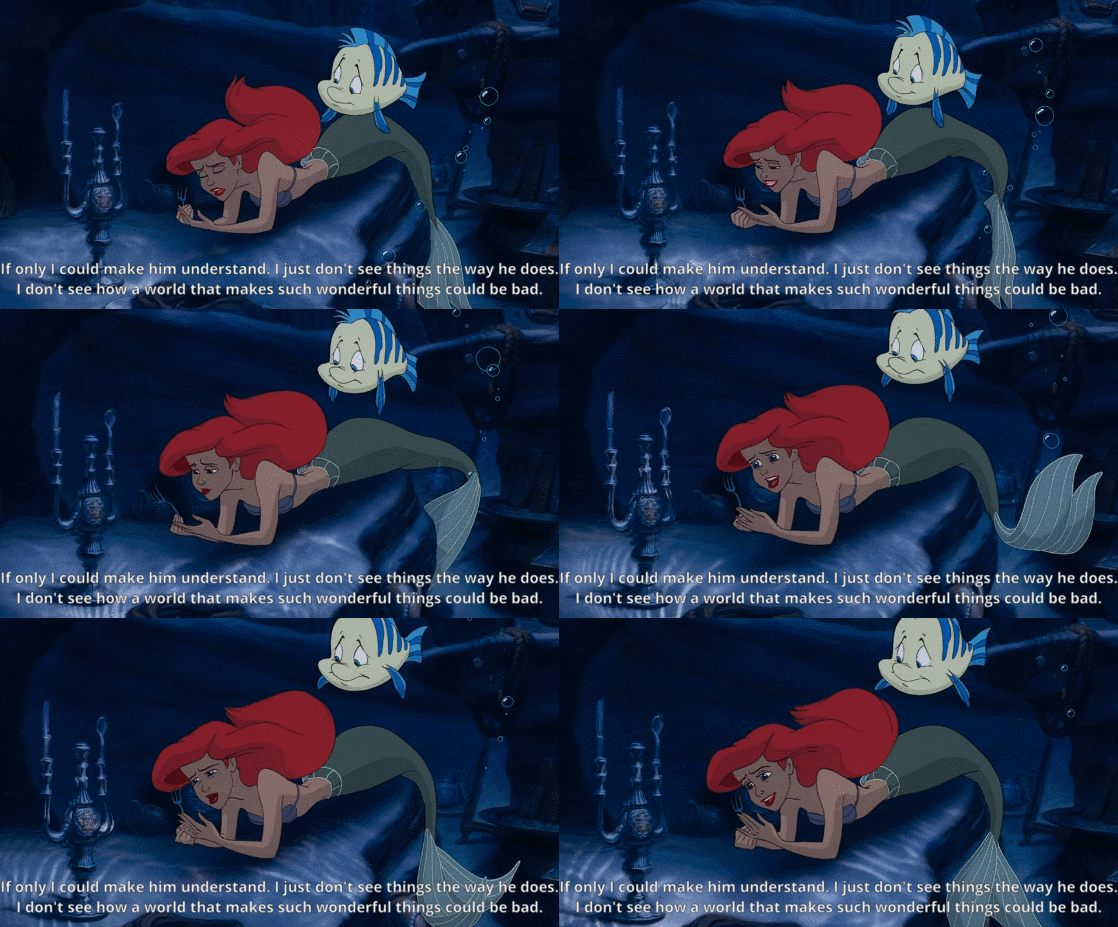
The film goes out of its way to establish Ariel as an outsider within her own society. Think for a moment about the opening lines of Part of Your World:
Look at this stuff. Isn’t it neat? Wouldn’t you think my collection’s complete? Wouldn’t you think I’m the girl The girl who has everything? Look at this trove, Treasures untold How many wonders can one cavern hold? Lookin’ around here you’d think Sure, she’s got everything…
People who criticize Ariel so often mis-characterize her as simply a spoiled teenager. The very statement, “She gave up her voice for a man!” implies she’s a foolish girl who throws her life and agency away in a fit of pique.
Yet, the opening of Part of Your Worldanticipates that certain members of the audience will have a superficial understanding of Ariel’s pain and directly addresses that. On a superficial level, Ariel does seem like “the girl who has everything.” She is the daughter of the most important merman in Atlantica, she has countless treasures hidden away in her grotto…
But that’s the thing, you see. They’re hidden in her grotto. Ariel may be the daughter of the sea-king, but the sea-king hates and fears humanity. Part of Your World is the most heartbreaking rebuttal to anyone who sees Ariel as a shallow teenager because it shows how alone she truly is. Except for Flounder, she has no one under the sea she can genuinely confide in. (She confides in Sebastian, of course, but he was sent by her father to spy on her and he does betray her trust
– by mistake, but he does). Her sisters and the rest of Atlantica presumably do not question the prejudices that cause the human world to be forbidden to the sea folk.
Ariel is an outcast, forced to hide who she is from the people who should love her unconditionally.
The more Part of Your World goes on, the more devastating and resonant Ariel’s collection of artifacts becomes.
These artifacts represent a void in her life and, at the same time, are the only means she has of filling that void.
She longs to have knowledge, but her society imposes ignorance on her. She longs to see the human world herself, to ask questions and finally be answered – but it is all denied her. The imposed ignorance forces her to live vicariously through the artifacts she collects.
She cannot see a couple dancing, so she must content herself with a music box.
She can only experience the shadow of fire on oil and canvas.
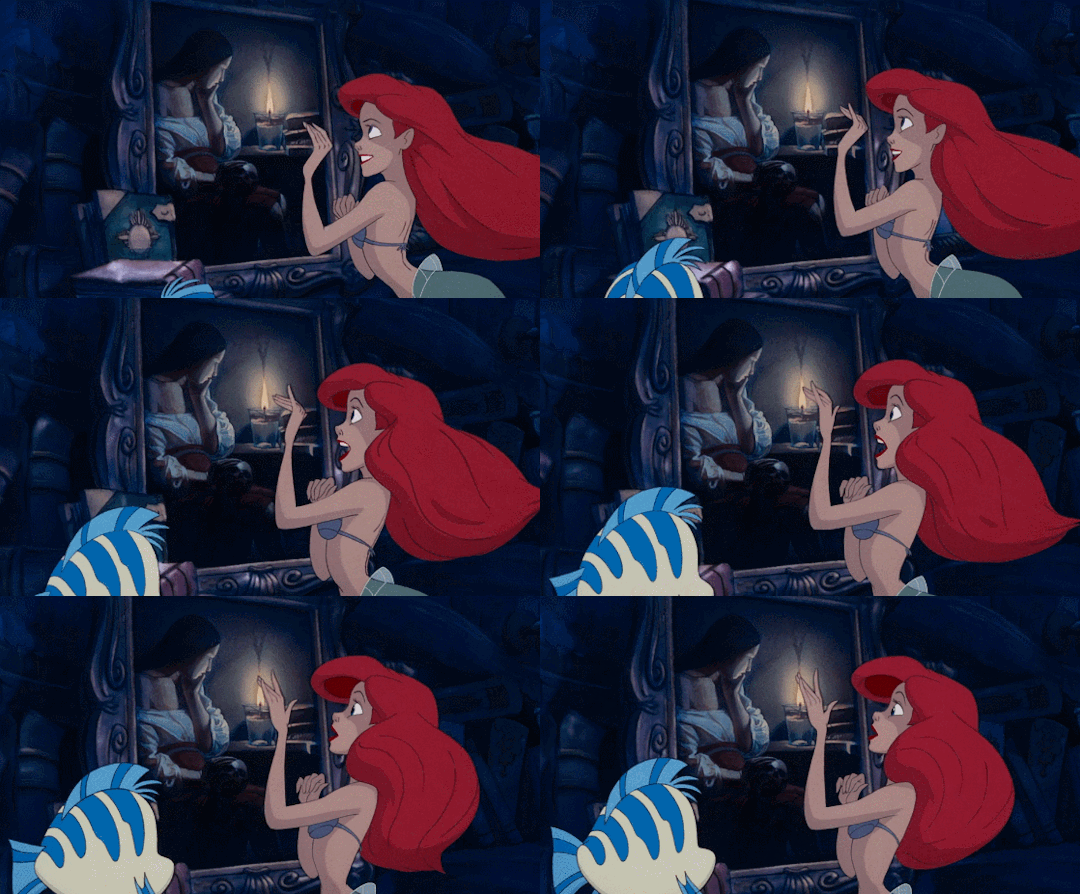
Her collection perpetually reminds her that there is a world beyond her reach. At the same time, it is her central way of interacting with that world. Yes, she can go up to to the surface and talk to Scuttle, but her collection is something so much more personal. These are items she saved from the ruins of ships, sometimes at the risk of her own life… so she could study them, learn from them, and lament the unjust rules of her society that prevent her from learning more…
Her courage, her curiosity, her thirst for knowledge are all bound up in these precious possessions.
And yes, they are objects. Yes, she wants more than a collection of objects. But this collection is all she has. And, as far as Ariel knows, it is all she will ever have…
When you’re all but alone in the world and you have only meager scraps to cling to, those scraps mean the world to you.
And, I remind you, Ariel cannot even openly enjoy her collection of scraps, the shadows of a world she cannot touch. She has to hide even them, guard them, keep them secret.
Ariel’s grotto is a place of solace and security where she can be herself without fear of judgment.
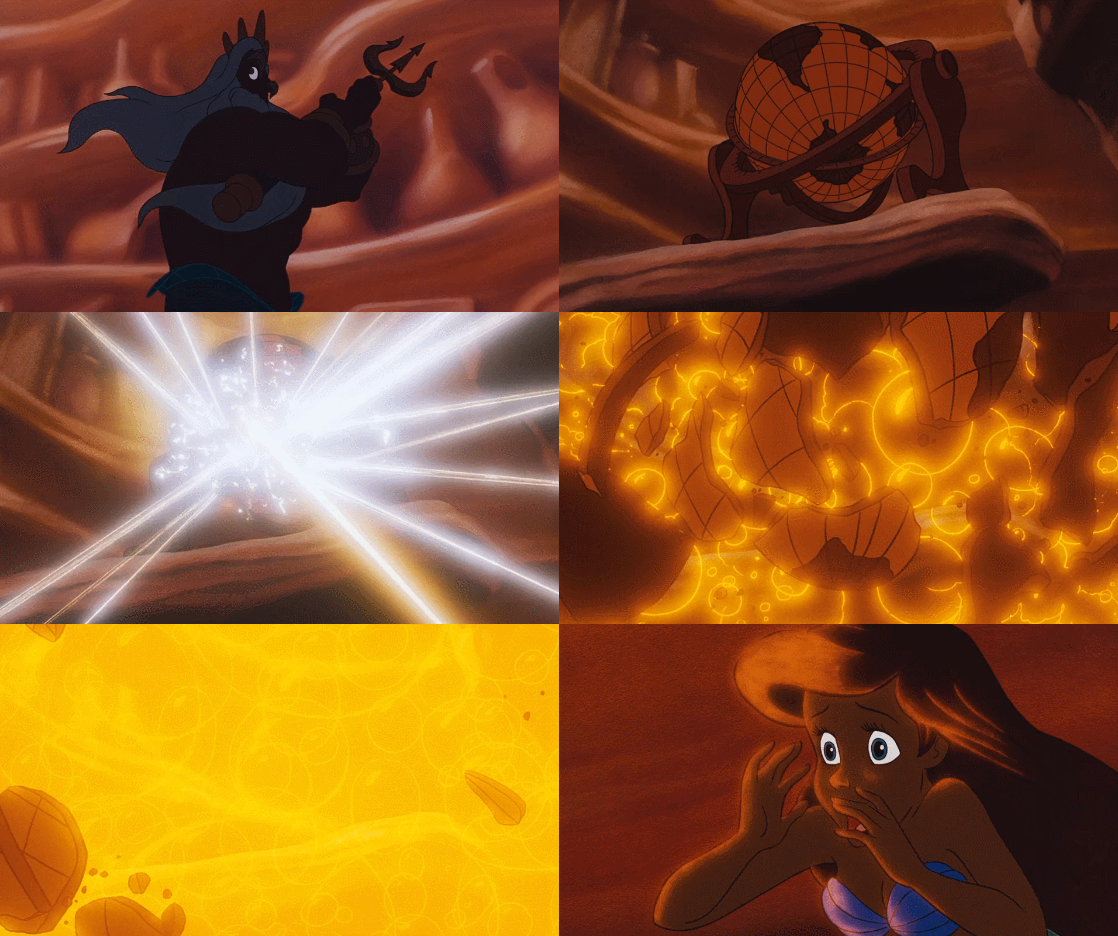
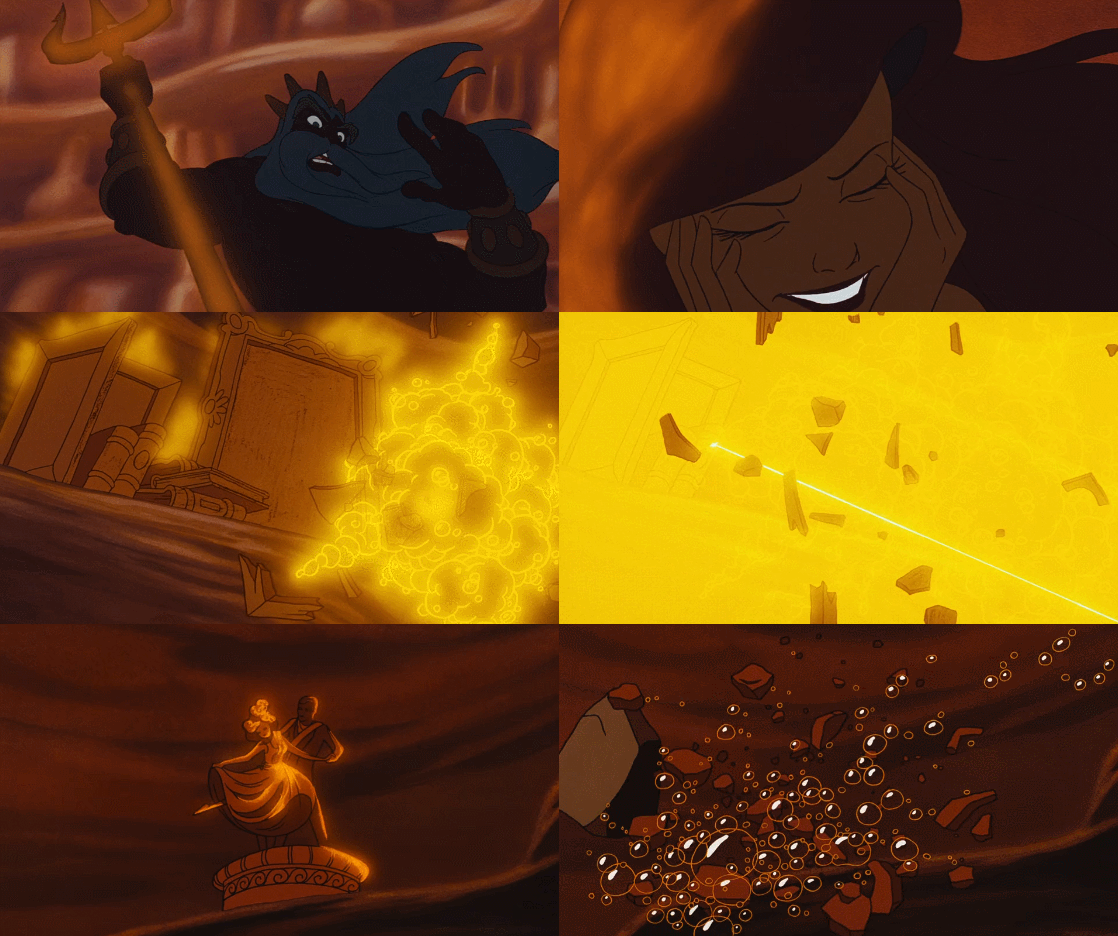
There is a reason the destruction of Ariel’s grotto harrowed me more as a child than any other scene in a Disney film. I could hardly watch it. I hid my face. I begged my family to skip scene. I was reduced to a sobbing mess. On a personal level, it harrowed me more than the destruction of Cinderella’s dress.
That reason is because, in watching the scene, I felt the pain of a place of refuge being invaded.
By the time we reach the destruction of the grotto, we are as emotionally invested in Ariel’s collection as she is because we see that the objects are more than objects. They are extensions of herself, encapsulating all her feelings of hope and hopelessness.
Destroying those items is like annihilating a part of her soul.
That is why I hate the “she gave up her voice for a man” line of thought so much. Because it so blatantly disregards the context of the film. Because it paints Ariel as a shallow teenager. Because it places blame for what follows solely on Ariel’s shoulders and absolves Triton of any wrongdoing.
I want to tread carefully here because, like Ariel, Triton is a nuanced and complex character. He has good intentions and cares about his youngest daughter.
Yet, even a well-intentioned individual can be in the wrong. Even an individual who is right about certain things (Ariel is indeed impetuous and reckless at times – though I hope my analysis reminds readers that those are not her sole character traits), can be wrong about other things.
And Triton’s confrontation with Ariel highlights his failings and his faults.
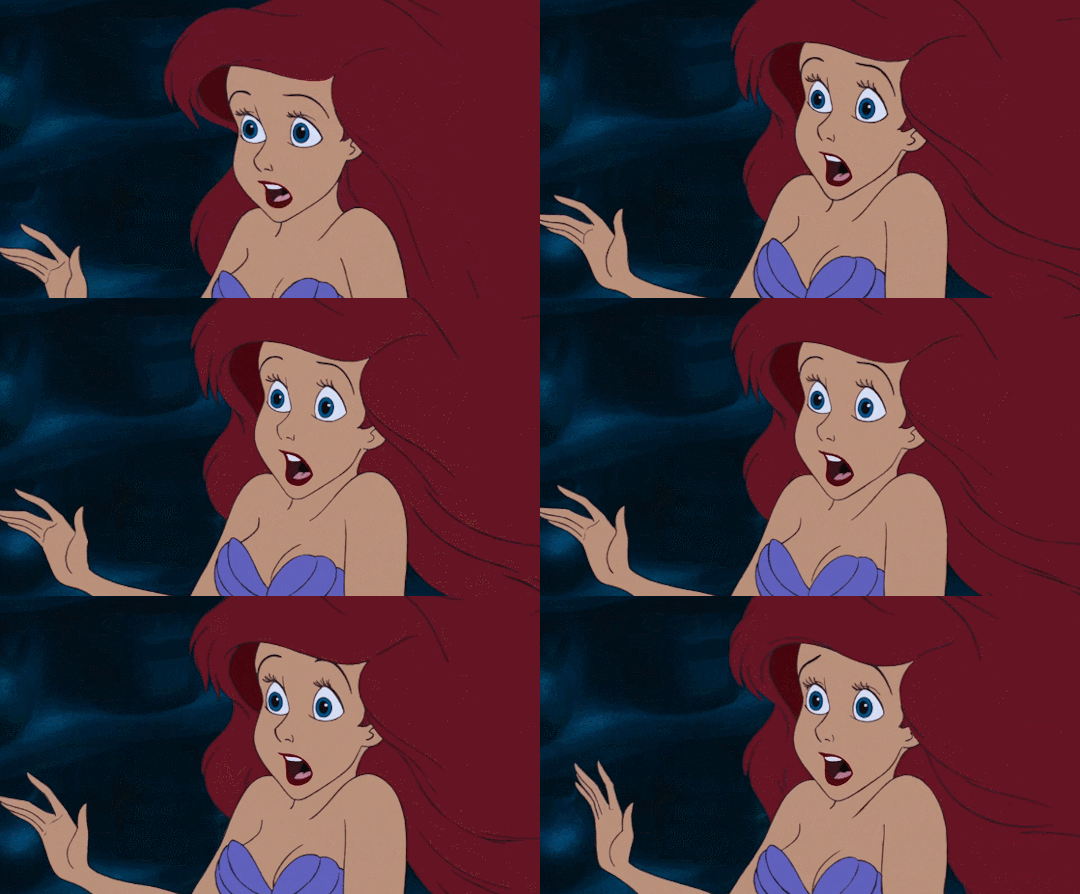
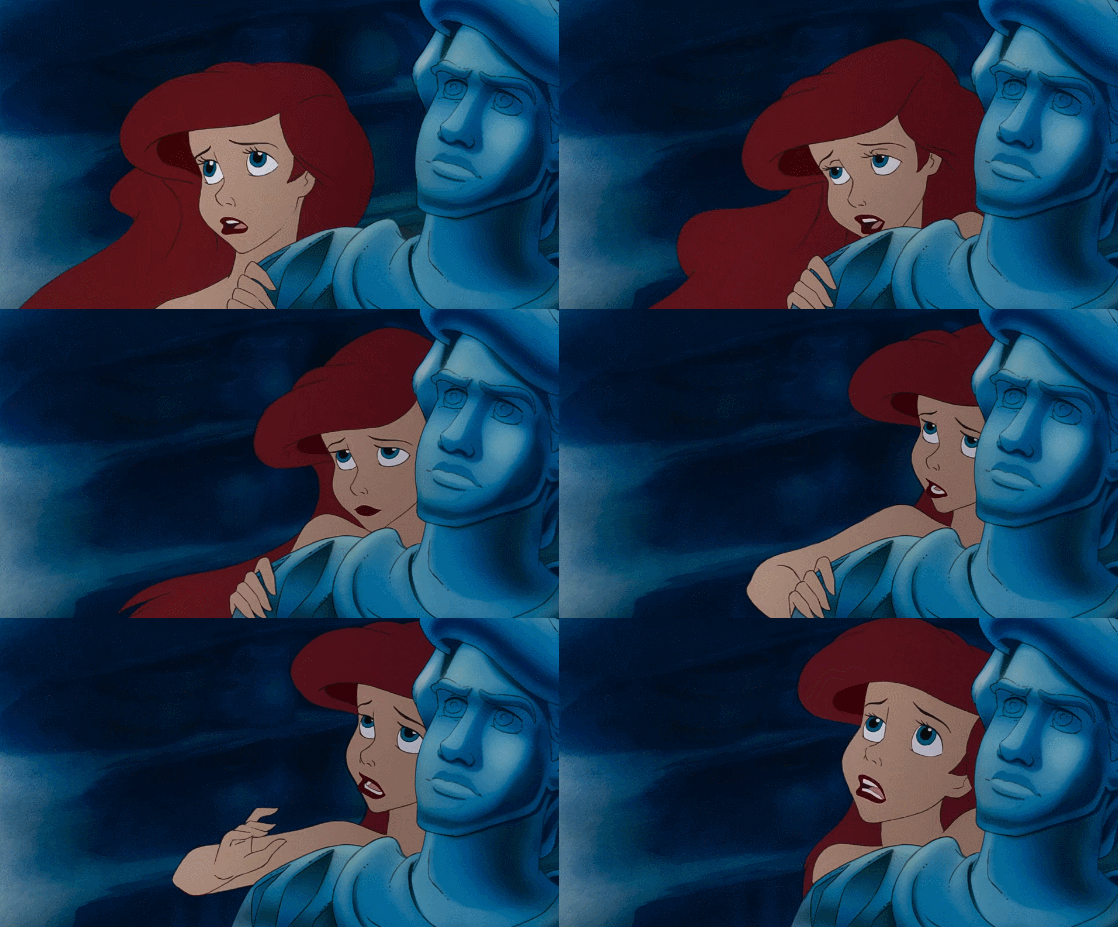
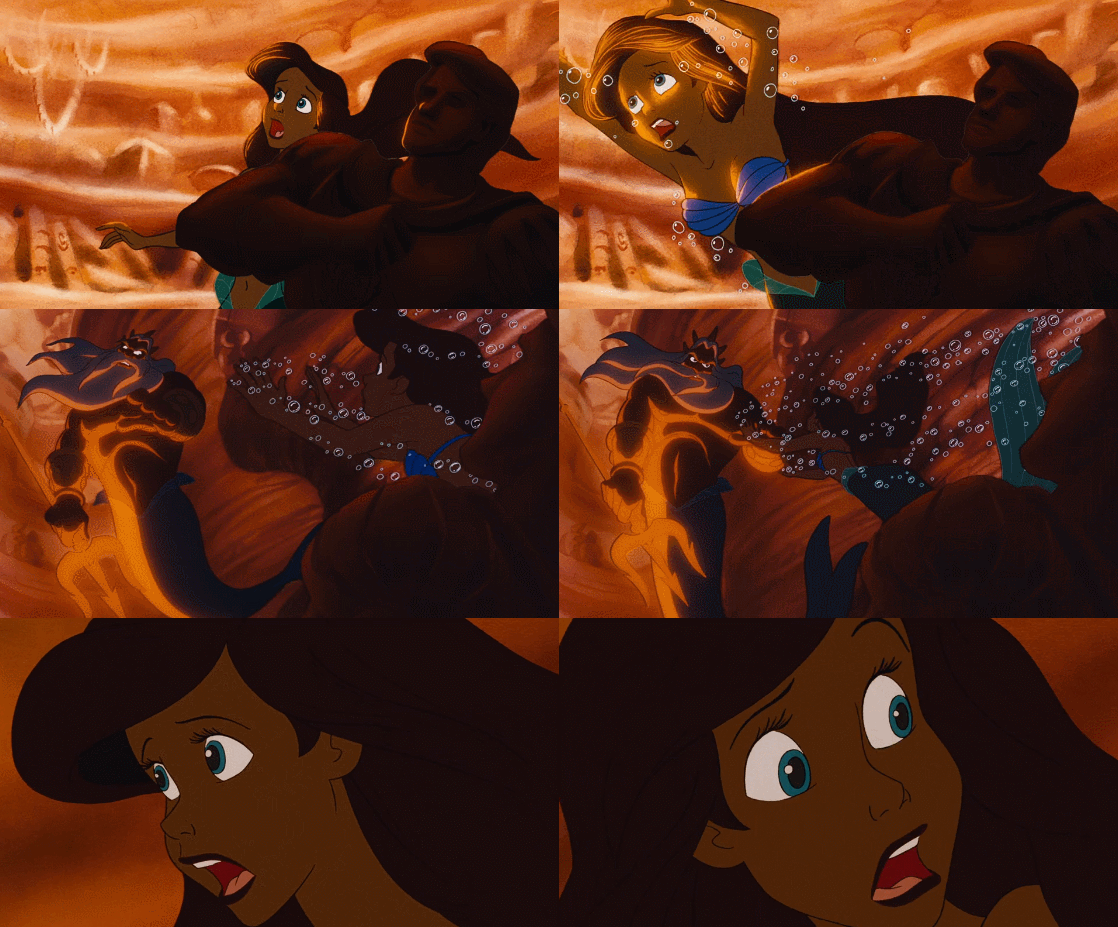
Look at Ariel’s face when she first sees her father in the grotto:
The enhancement of expression in animation allows the audience to clearly see the fear in her face.
Triton has created an environment where his own daughter is afraid of him.
No parent should do that to their child.
Confronting Ariel, Triton says, “I consider myself a reasonable merman. I set certain rules and I expect those rules to be obeyed.”
On one level, Triton is right to expect his children to respect the rules he sets in place.
What I feel Triton misses, however, is that respect is not the same as intimidation.
Since Triton wants Ariel to accept his rules based solely on his authority as her father, he makes it impossible for there to be any communication between himself and his daughter.
This dynamic means that he will not listen to Ariel even when Ariel is in the right and he is not. Children should listen to their parents, but in the same way, parents should listen to their children.
Triton may be in the right to worry about his daughter’s safety, but his fear is still born of bigotry – bigotry that Ariel recognizes and rejects.
Triton, after all, grows angry at his daughter because she wouldn’t let another living being die. He specifically calls her out because she “rescued a human from drowning.”When Ariel counters that allowing someone helpless to miserably drown is cruel, he shuts her down with:
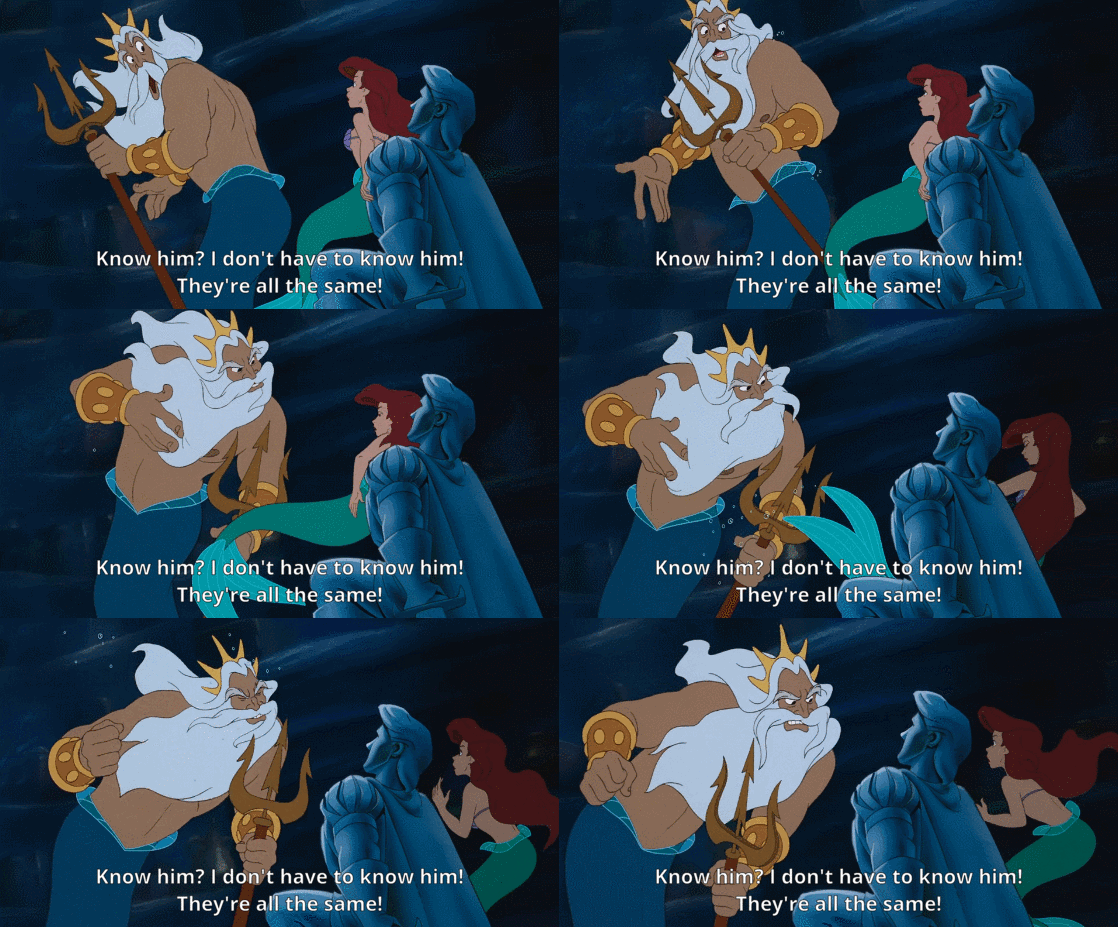
When Ariel points out the illogical nature of her father’s brutal line of thought and says, “You don’t even know him!”, Triton responds:
Even if a viewer is largely sympathetic to Triton, that viewer cannot ignore Triton’s prejudice in this moment.
He generalizes millions of people.
And if the rules he sets down include the tacit understanding, “Let innocents die because, by virtue of their humanity, their lives have no value,” then maybethose rules deserve to be broken.Maybe those rules need to be changed.
Ariel may be a teenager, but she is wiser than her father here.
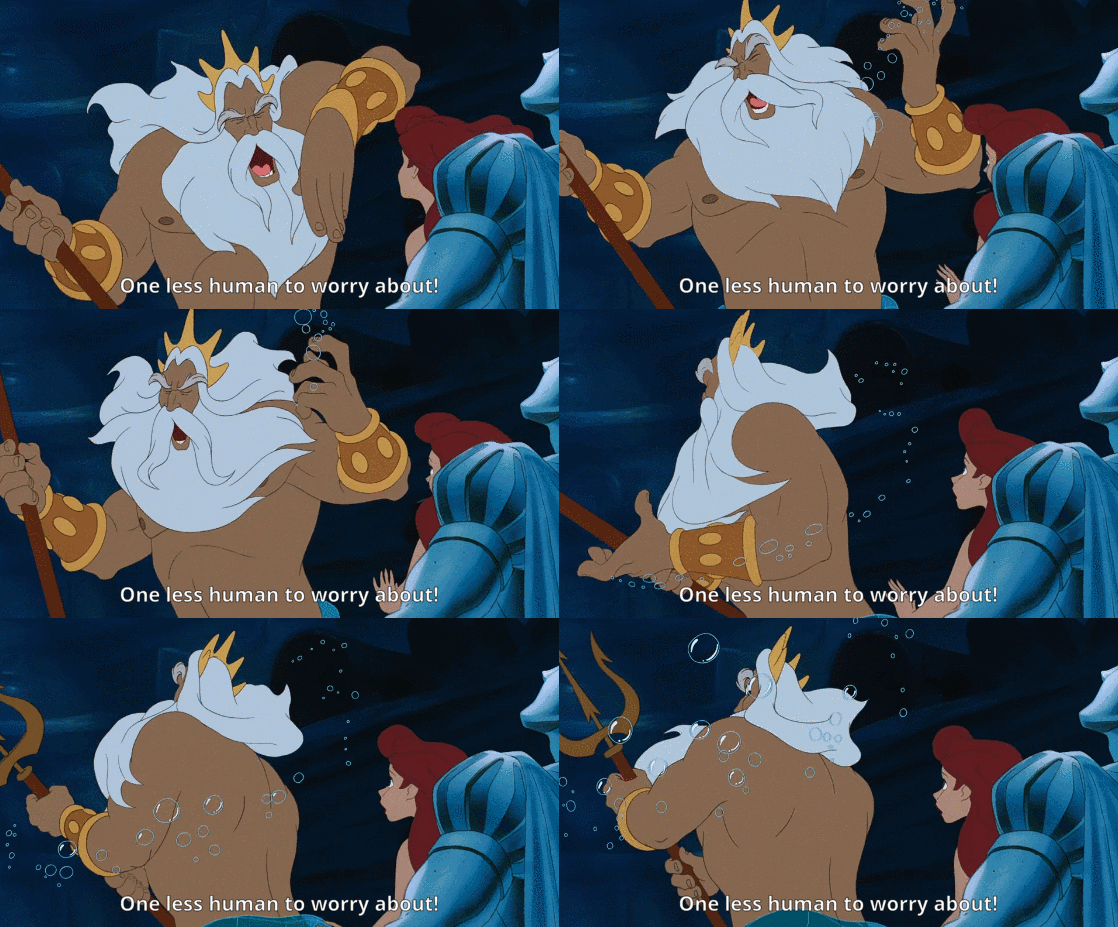
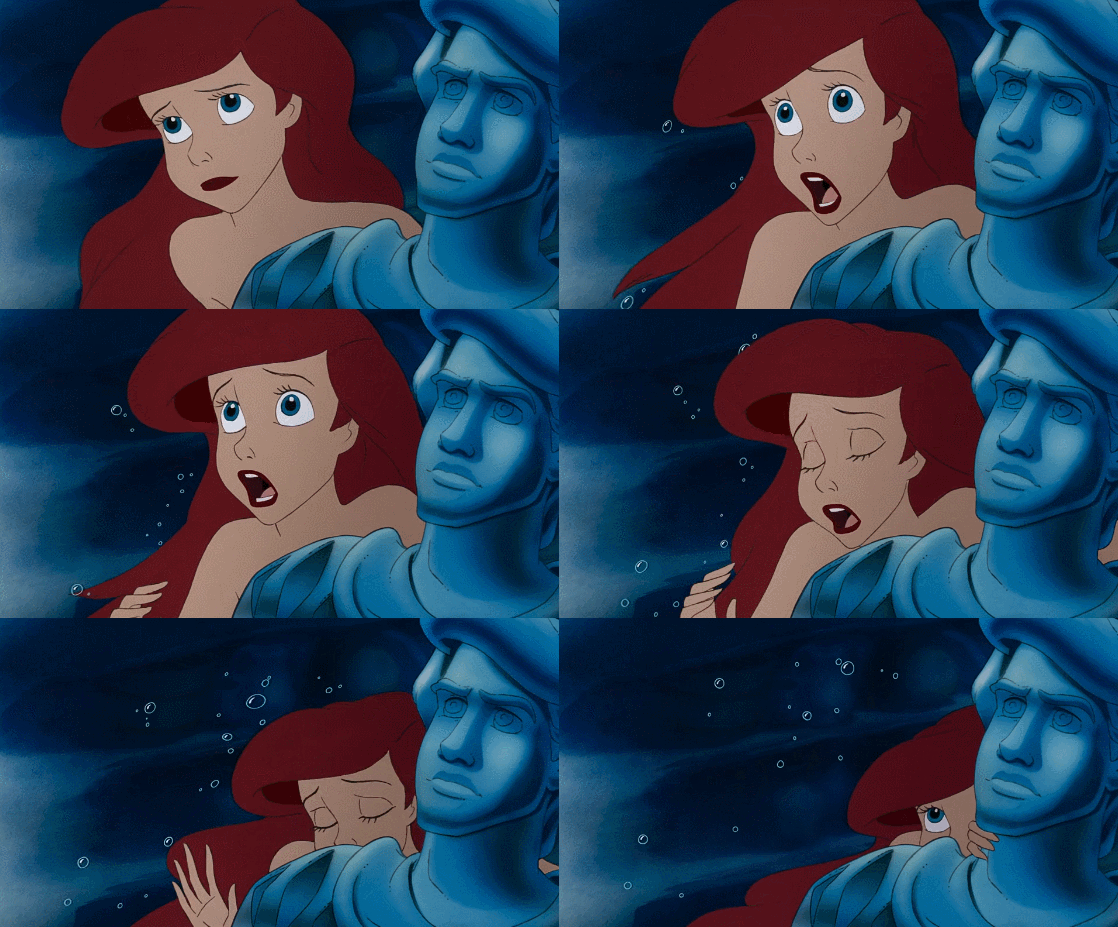
(Also, can I say that Ariel’s body language here breaks my heart every time I see it? She’s swimming away from her father, recoiling…
…until she’s cowering behind Eric’s statue. She looks like she’s about to cry as her father pours forth more vitriol…
…and after she bursts out with the exclamation, “Daddy, I love him!”, she’s terrified that she’s said it.)
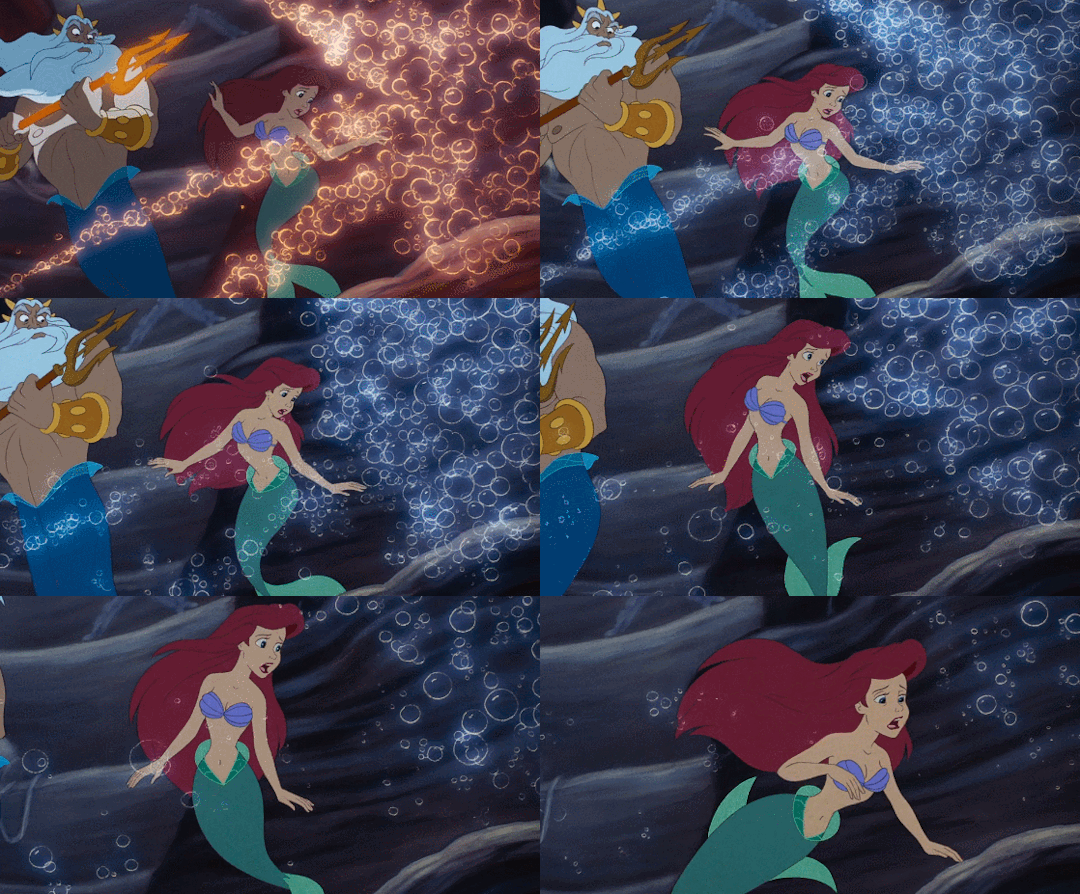
Triton believes that he alone is in the right and destroys the grotto because he feels it is “the only way” to “get through to” his daughter. He believes he must be cruel only to be kind.
Yet, in the end…
…he only succeeds…
…in being cruel.
Triton’s unwillingness to listen to his daughter
– his unwillingness to treat her with the same respect he demands of her –
only widens the gulf between them.
Ariel does not go to the sea-witch because she has been mooning over a man.
Ariel goes to the sea-witch because she has no voice in her own home. Becoming human, she gains the ability to live life on her own terms. Becoming human, she ironically gains the voice she has been denied for so long.
Ariel goes to the sea-witch because her father sends a message to her – a message that she does not matter, that there is no place for someone like her in Atlantica.
Triton may never have meant to send that message, but send it, he did… and he should be held accountable for that.
Indeed, the film does hold him accountable for that.
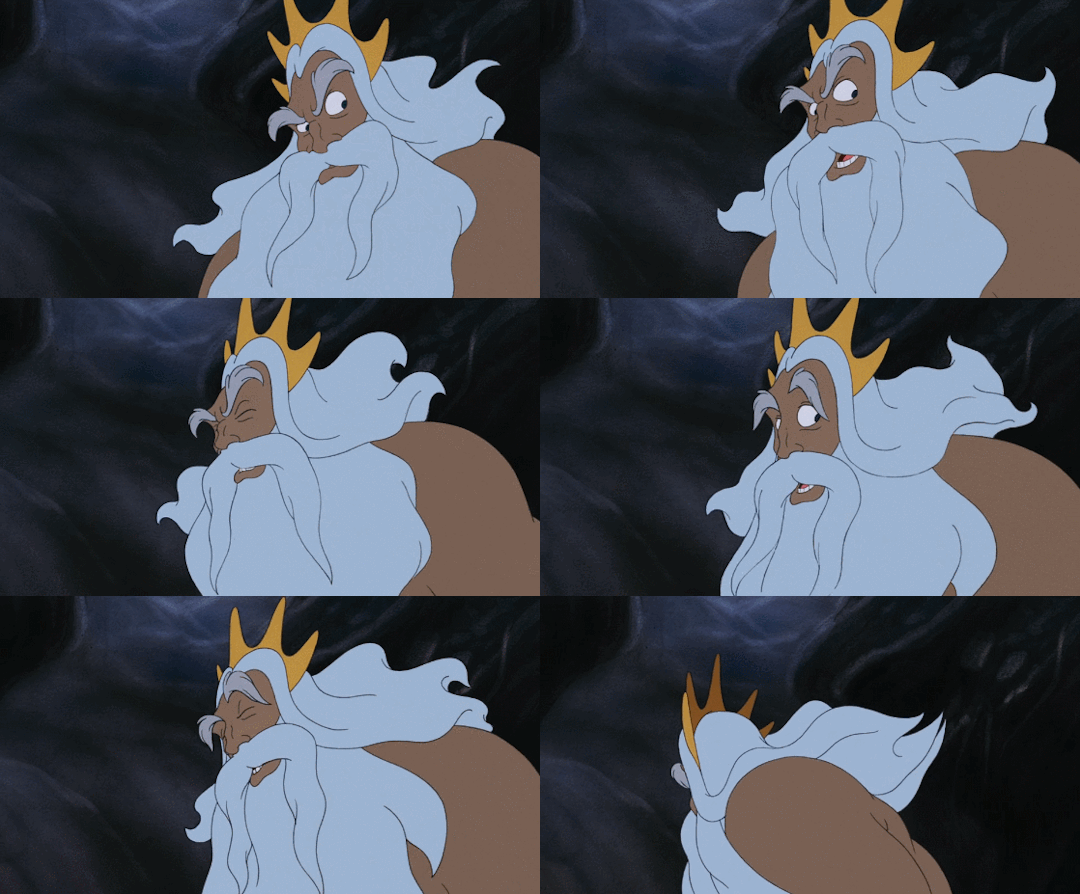
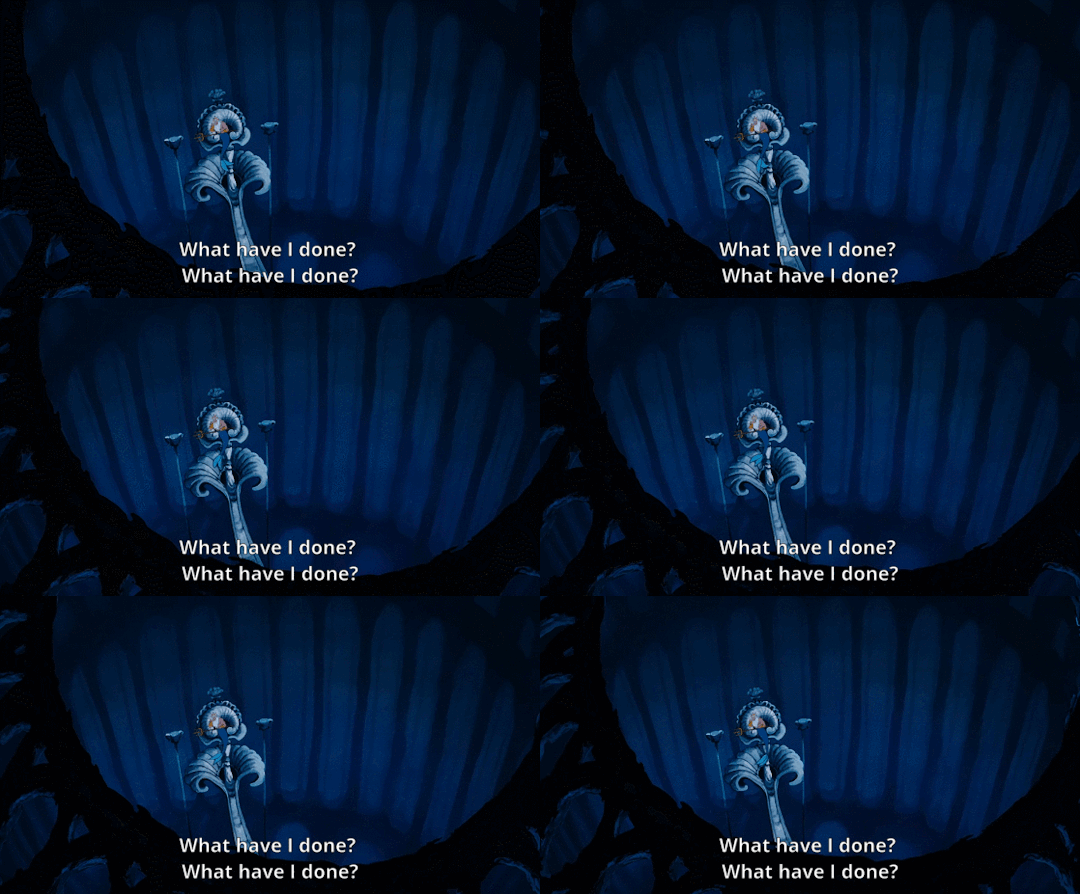
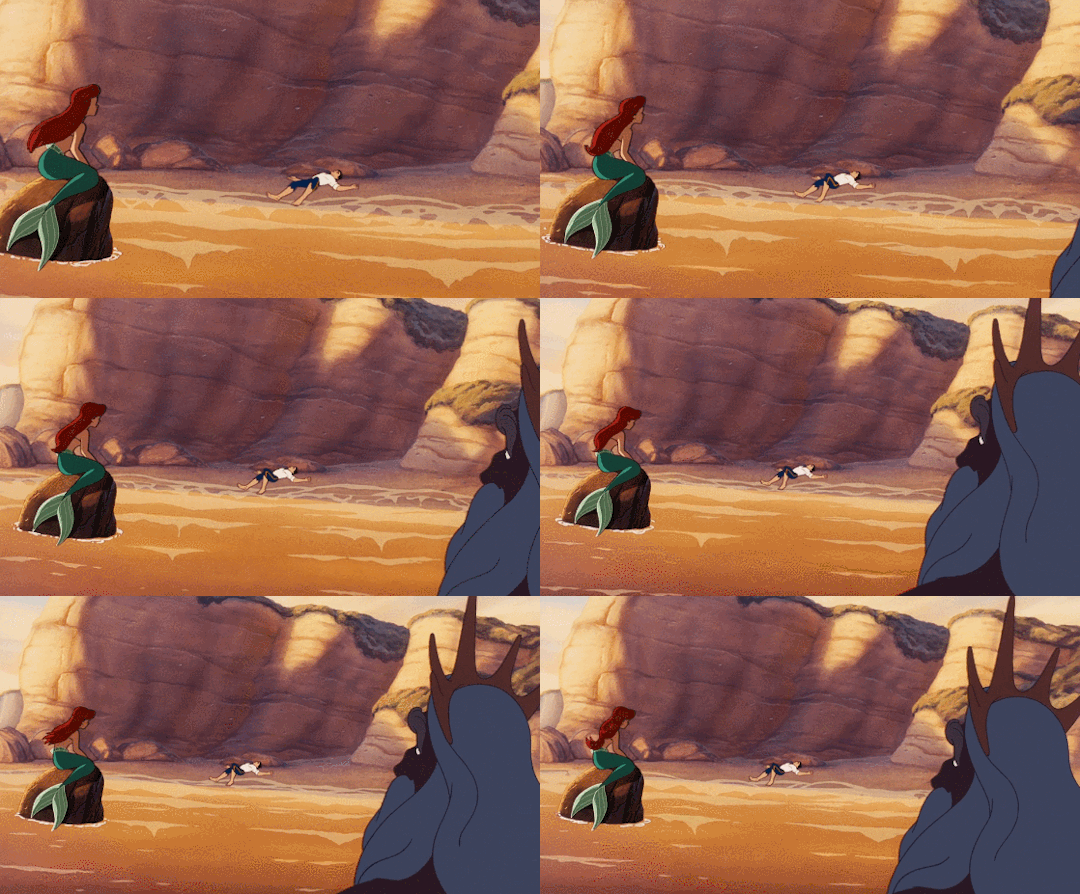
After destroying the grotto, Triton realizes he has done a horrible thing.
Look into his eyes after Ariel falls to weeping:
Look at the regret in his eyes. Look at the remorse. He knows he has gone too far. He never meant to hurt his daughter like this.
And when Ariel vanishes from Atlantica, Triton takes responsibility for his actions. What does he say when his daughter cannot be found? Does he say, “What folly has my daughter gotten herself into now?”
No. He says:
Simply saying that Ariel ‘gave up [her] voice for a man’ ignores the painful complexity of the situation in which she finds herself. It ignores the depth of her motivation. It ignores Triton’s culpability. It ignores her best character traits and only highlights her flaws (and yes, she has flaws, for she is a multifaceted, well-written character.)
But Ariel’s rejection of prejudice, her ability to see beauty in a group that nearly everyone around her demonizes, her courage and determination and love, are all venerable traits…
…and Ariel’s courage, determination, and love are what inspire Triton to open his heart and change.
Some people say that The Little Mermaid is more Triton’s story than Ariel’s. I disagree and feel that assessment unfairly dismisses Ariel’s emotional journey. Triton has a compelling arc in the film – but that arc is only set in motion because of Ariel’s agency.
He learns from his daughter’s example.
He grows because of her.
Why don’t we talk more about Ariel, the young woman who always challenged her father’s prejudice? Why don’t we talk more about Ariel, who actively spoke out about the flaws she saw in her society? Why don’t we talk more about Ariel, whose actions helped change that society for the better? Why don’t we talk more about Ariel, who formed a bridge between two worlds and enacted positive change?
Why don’t we talk more about that Ariel?
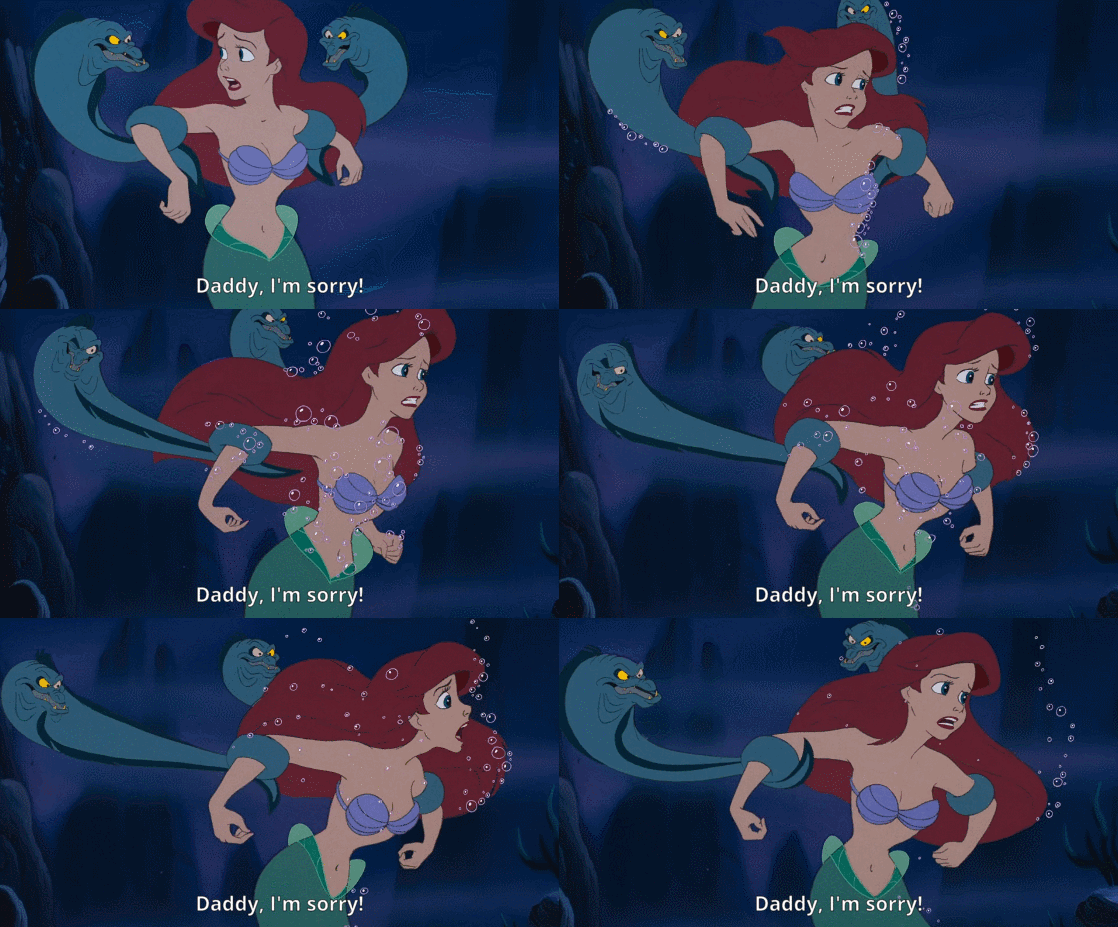
I know Ariel can be impulsive, but she is sixteen years old, and her impulsiveness only makes her character realistic. She makes mistakes but, like her father, she owns up to those mistakes and learns from them:
There are critics of Ariel’s character who want to make the story of The Little Mermaid black and white. Because Triton recognizes Ariel’s impulsiveness, they ignore Triton’s faults and trivialize Ariel.
Yet, the story the film presents is not so black and white. Ariel and Triton are not so one-dimensional.
They both learn from each other and grow together.
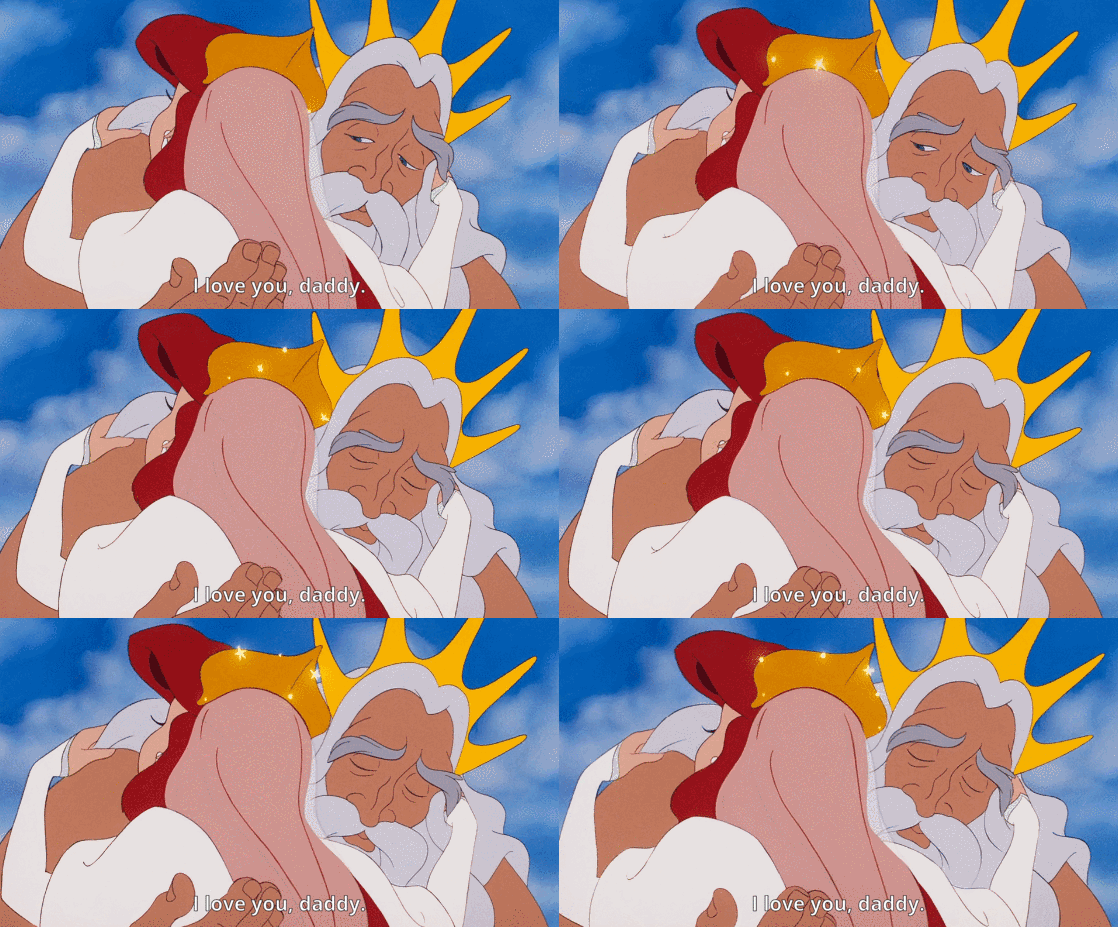
This embrace is so meaningful because, by the end of the film, Triton finally shows Ariel the same respect he asks of her and in so doing, he earns her respect.
Ariel, meanwhile, recognizes her own mistakes and gains a new appreciation for her father.
The Little Mermaid is a beautiful film and Ariel is a brave, inspiring, complex heroine.
I also want to point out, Howard Ashman, a gay man who died of AIDS, was a key creator in this film. He also had a key role in creating Beauty and the Beast. The films we worked on were about outcasts.
@the-blue-fairie thank you so much for putting into words what I felt but couldn’t explain! Ariel has always been my fave princess as well, and as I grow older I’ve come to realize more and more how she will never stop being a great representation of me. Exactly because of all what you wrote above. Thank you. I’m a complete emotional mess but happy, too. ♡
To the person whom I flipped off for honking at me in traffic, sorry about that. ‘Twas unnecessary.


 NineofShades